Showing posts with label Plant Profiles. Show all posts

Wednesday, February 29, 2012

Variegated Purple Heart

Purple Heart is a pretty great plant. The striking purple color of the leaves and little purple flowers are hard to beat.

Purple Heart is super easy to grow in sun or part sun and requires very little water.  It looks great as ground cover or sprawling over a wall.  The picture below was taken last November. 

Purple Heart is hardy in zones 8 - 11.  In Zone 8, where I live, Purple Heart normally dies back during the winter months, but comes back from the roots in the spring.  Of course, this winter was so mild it hardly died back at all.

With everything Purple Heart has to offer, it's hard to believe it could be topped, but check out this Variegated Purple Heart. 

The variegation ranges from dark purple to light purple and pink, with cream and green thrown in for good measure.

The Variegated Purple Heart is a welcome addition to my garden.  Hopefully, it will be a fast grower.  I have a feeling I'll be taking lots of cuttings of this fabulous plant.  

Monday, January 16, 2012

Foliage Followup: Winter Interest

In the winter, when the majority of blooms have faded, what remains?  Today Pam Penick asked garden bloggers to look for interesting, moody foliage in their gardens in her foliage followup blog.  
 
So, I took a walk around the garden and the mood I sensed was a wistfulness for spring. Perhaps the garden was just reflecting my own mood.  Any chance of canceling winter due to lack of interest? 

Lovely new foliage of a Knockout Rose. 
Fuzzy and fun in any season:  Lamb's Ear.
Dusty Miller brightens the winter landscape.
Warm weather shrub, Purple Vitex, still hanging in there. 
Purple Heart is taking advantage of the mild winter.
Artichokes are at home in the winter garden.
Trailing Rosemary in bloom.
Jerusalem Sage has large, showy yellow flowers in the Spring.
Artemesia 'Powis Castle' foliage is soft and lacy.
The yellow flowers of the Oregon Grape Holly (Mahonia Aquifolium) will develop into purple grape-like berries.

Monday, December 26, 2011

Party Favors and Fireworks

New Year's Eve is just around the corner and the plants in my greenhouse seem to be getting in the spirit with a little display of their own.
  
The fully open flowers of Queen's Tears curl open like a party favor.

The flower buds of the mother of millions plants are preparing to open like fireworks just before they burst.  

Foliage exploding in color creates a beautiful greenhouse display.
Variegated Hibiscus
Coleus
Coleus
Croton
Have a safe and happy new year!

Saturday, December 17, 2011

Rock-a-bye Trees

In a last ditch effort to eke out some food stores, the post oaks on my property are hanging onto their leaves longer than usual.  Late season rains have created a party atmosphere and no one wants to go to bed yet.  In a fit of tantrum, the trees seem to be refusing sleep like an exhausted toddler.  The result is an explosion of fall color that seems uncommon in mid-December, but is appreciated none the less.

Rock-a-bye trees... time to sleep.


Wednesday, December 14, 2011

The Sweet Smell of Lavender

Lilacs remind me of my childhood, but lavender is the fragrance my adult senses crave.  I love everything about lavender.  I could just roll around in it like a big Labrador Retriever.  Fortunately, it won’t come to that, since I’m well stocked with lavender scented lotions, soaps and candles. 

Lavender plants are beautiful in the garden.  They are drought tolerant and grow well in our climate and soils.  With over 30 species of lavender, there's lots to choose from.


Lavender has a calming scent that eases stress and relaxes the body.  People have used lavender for years for its fragrance and medicinal properties.  You can even eat it as I found out when I attended the Blanco Lavender Festival.  The lavender margaritas were actually pretty good.

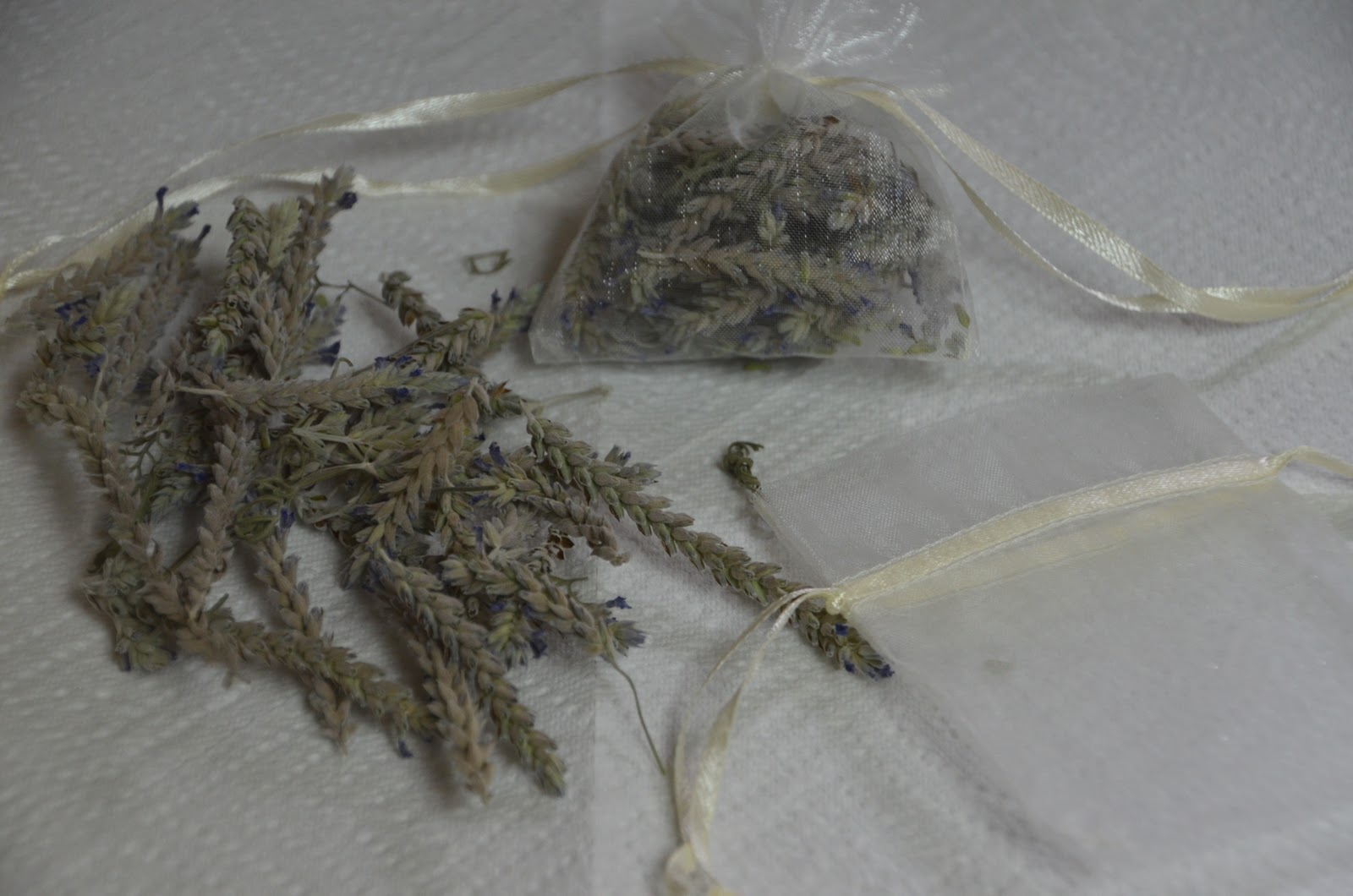
When the cold weather set in earlier this month, I decide to preserve some of the wonderful fragrance by drying my own lavender.  I cut bouquets of flowers and bound them with rubber bands, then, hung them to dry for about a week or two.


Today I used the flowers to make lavender scented sachets.  Sachets are great to hang in a closet or place in drawer to freshen up clothes.  Some lucky friends of mine, might be getting these for Christmas, so if you read my blog, just act surprised.


Wednesday, December 7, 2011

Zap! Hard Freeze

The first freeze of the year, and mother nature hit hard.  Looks like we bottomed out at about 26 degrees.  Ouch!  I wasn't expecting that, and I didn't cover anything.  
 
In the veggie garden, cabbage and rutabaga weren't phased at all.  The broccoli looks a little unhappy, but it will bounce back.  The 'Bright Lights' Swiss Chard did not fair well.  This variety of chard does not tolerant freezes as well as some of the others.

The remaining pepper and tomato plants are history.

 
On the ornamental side of the garden, the Root Beer Plant, which was lively just yesterday, is looking like a wet dish rag. 
 
This spider lily looks a little defeated, but not totally down for the count.
 
Purple Lantana was one of the stars of my drought stricken garden this year.  The freeze nipped the leaves, but some flowers are hanging in there. 


This purple vitex (vitex trifolia atropurpurea) is evergreen in zone 10.  In zone 8, however, it will eventually die back to the ground and return in the spring.
 
In the greenhouse, a little extra help from a portable propane heater kept everything a toasty 52 degrees.
 
Despite the chilly start, the inside of the greenhouse maxed out at 81 degrees.  Balmy to say the least.  
 
Flowering plants such as this begonia are still blooming. 
 
This desert rose has decided to bloom too.


This night-blooming cereus is enjoying it's hanging basket in the sun.  The pink fruit looks very similar to a prickly pear and is just as edible.  Unlike the prickly pear, the cereus fruit is spineless.

Another freeze is on the way for tonight.  Bundle up.

Wednesday, November 30, 2011

No Frozen Root Beer Here

Hey, guess what?  I haven’t had a freeze yet this year!  I can’t decide if I’m bragging or bewildered, maybe some of both.  Since my little 2 acre oasis isn’t located in Hawaii, I know it will eventually freeze, but for the present I am still enjoying the beauty of a green landscape (thanks to the recent rain).

One of the plants I’m still enjoying is called Root Beer Plant (piper auritum).  Root Beer plant, also called Hoja Santa, is a perennial related to the pepper.  As soon as we get a freeze, this plant will die back to the ground.  It’s root hardy to 15-20 degrees, so in Zone 8, it will come back pretty reliably.  Mine came back even after last winter’s 17 degree low.  

Root Beer plant is one of those fun pass along plants.  I saw one in a nursery for the first time this year, but normally you would get one of these from a gardening friend.  Root Beer plant has a tendency to spread by underground runners, so there’s always some to share with friends.

Grow Root Beer plant in the shade, water it regularly and you’ll be rewarded with lush tropical foliage and exotic flowers.  I've read the plants can get quite large, but mine have never gotten larger than 3-4 feet tall. 

The leaves on this plant are big and have a spicy scent when crushed.  Some say it smells like root beer, but I think mine smells like black licorice.  In Mexican cooking, the leaves are chopped for flavoring or used to wrap meat and tamales. 

The flowers of the Root Beer plant are long, white, and unusual enough to attract the attention of passersby.

Wednesday, November 23, 2011

The Exotic Blooms of Queen's Tears

Queen's Tears (Billbergia Nutans) is soaking up the Texas sun and putting on a show in my greenhouse today.  


Queen's Tears is a very low maintenance Bromeliad.  I provide mine with standard potting mix and water twice a week in the summer. I've read you should fertilize about every 2 weeks with a diluted liquid fertilizer, but honestly, I fertilize, maybe, once a month. 
 
Even with average care, this plant needs to be re-potted nearly every year.  For this reason, it has received the nickname the "friendship plant".  Queen's Tears is an excellent pass along plant that I would be happy to share with anyone.  Just ask. 
 
Queen's Tears likes bright indirect light and thrives outside in the summer under my shade trees.  In the winter time, you'll need to bring it into the house or a heated greenhouse.  Be sure to cut back on water and fertilizer during the winter months.   
 
My Queen's Tears normally bloom in late winter to early spring, so seeing it bloom in November was a nice surprise.  The pink bracts are exotic by themselves, but the flowers... Wow!  
 

Thursday, November 10, 2011

Jack and the Castor Bean Stalk

Jack and the Bean Stalk is a children's fairy tale in which a giant bean stalk sprouts up from a few magic beans.  When I think about the Castor Bean plant, I can see how legends such as Jack's bean stalk might have come about.

Castor bean may not be Jack's Bean Stalk, but how many other plants can you start from seed in spring and end up with a 10-15 foot tall plant by the end of summer?  Even in a droughty year with little water, the tallest castor bean plant in my garden measured in at over 9 feet tall. 

Castor bean (Ricinus Communis) has large palmate leaves with a distinctly tropical feel.  Grown as an annual in zone 8, the castor bean plant will make your garden feel lush with it's abundant foliage.

Separate male and female flowers appear on the same plant, but the seeds pods are the real attention grabbers.  

The developing seed pods are prolific, showy and colorful.

Flowers and seed pods continue to develop throughout the summer and into the fall.

The dried pods cling to the plant in clusters that are easily harvested.

Each seed pod has 3 segments, which can be easily separated.  The segments can be split open revealing one seed per segment.

A word of warning about this plant.  All parts of this plant are poisonous, but the seeds are particularly deadly if consumed.  Special care should be used to keep this plant out of the reach of children and pets.